Warehouse safety blind spots are rarely discussed openly — yet they are often responsible for serious injuries, compliance risks, and operational losses.
Most warehouses have safety policies.
Most teams conduct training.
Most managers review incident reports.
But the real danger lies in the warehouse safety blind spots that go unnoticed until something goes wrong.
Let’s talk about the four that no one talks about — and how real-time visibility is changing safety culture across North America.
Near-Misses That Never Get Reported
Every warehouse experience near-misses.
A forklift brakes hard at the last second
A worker steps into a traffic lane
A pallet almost tips
No injury. No damage. No report.
But near-misses are early warnings of warehouse safety blind spots.
According to OSHA data, near-miss incidents often precede major accidents. Yet most facilities rely on manual reporting — and human memory is unreliable.
Without objective tracking:
Patterns stay hidden
High-risk intersections go unnoticed
Management assumes “everything is fine”
Real-time location data changes this. When movement patterns are tracked continuously, near-miss frequency becomes measurable.
Related reading: Warehouse Safety
Unauthorized Zone Violations
Most warehouses have restricted areas:
High-voltage zones
Chemical storage
Heavy machinery areas
Maintenance-only corridors
But how do you know when someone enters these areas?
Signage isn’t enforcement. Cameras are reactive.
Unauthorized access is one of the most overlooked warehouse safety blind spots because violations often go undetected — until an incident occurs.
With real-time zone alerts, managers can:
Instantly detect entry into restricted zones
Trigger alerts to supervisors
Log violations for compliance documentation
This shifts safety from “policy-based” to “data-driven.”
Forklift–Pedestrian Interaction Risks
Forklift-related accidents remain one of the top causes of warehouse injuries.
The issue isn’t just reckless driving.
It’s proximity.
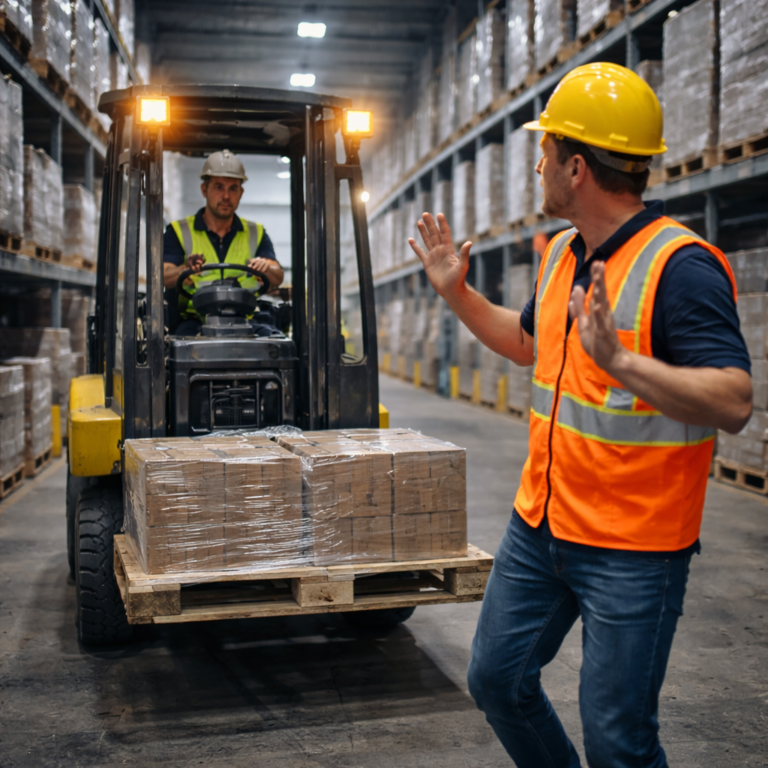
Forklifts and pedestrians constantly share space. Even trained operators can’t see through blind corners or shelving.
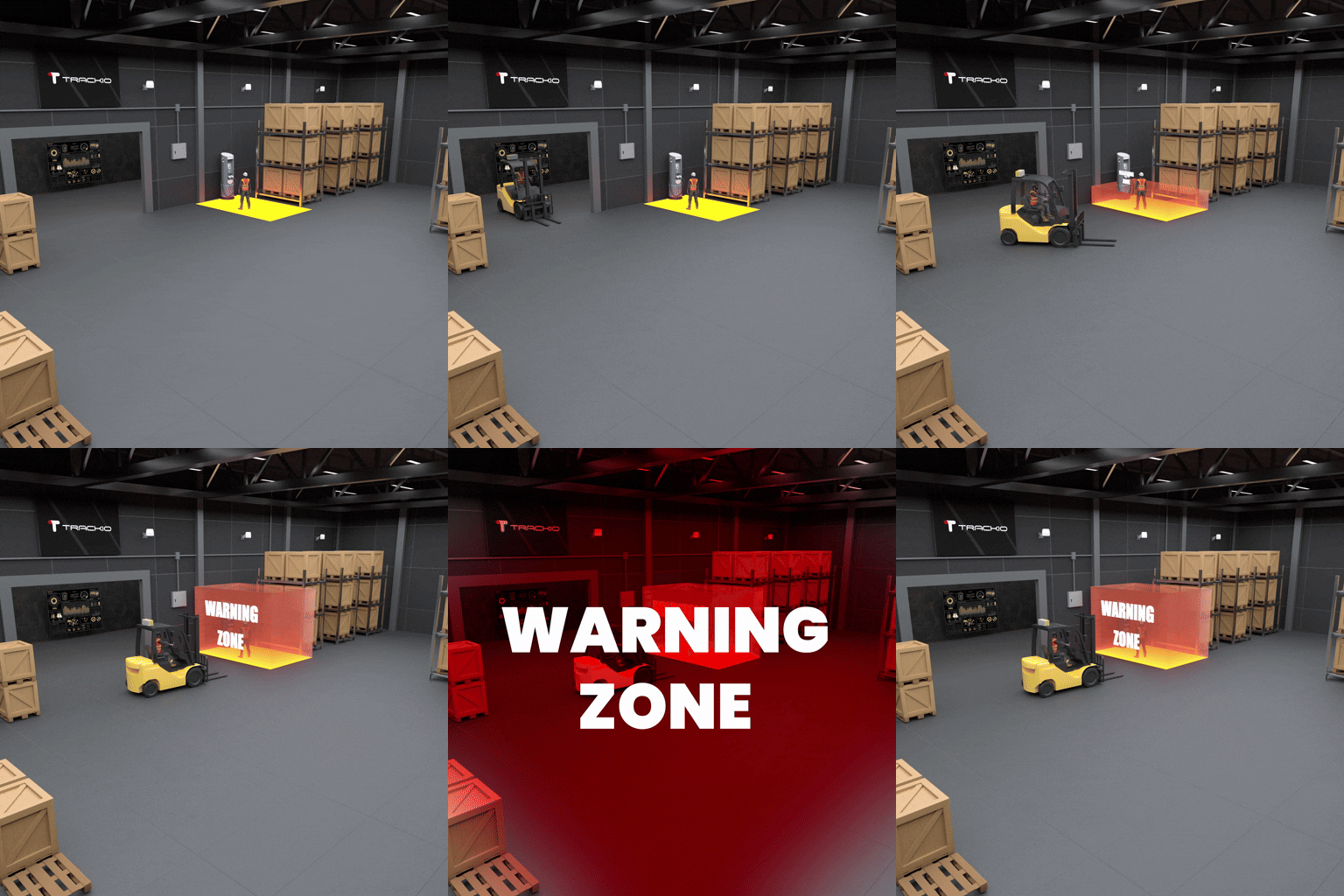
Forklift–pedestrian proximity is one of the most critical warehouse safety blind spots because:
Blind spots exist in aisle intersections
Noise levels reduce situational awareness
Fatigue impacts reaction time
Real-time proximity alerts create immediate awareness when forklifts and workers come within unsafe distances.
Instead of reacting after a collision, facilities can:
Analyze high-risk intersections
Redesign traffic flow
Create pedestrian-only corridors
Warehouse safety blind spots become measurable risk zones — not guesswork.
Unreported Downtime That Impacts Safety
Downtime isn’t always mechanical.
Sometimes it’s behavioral:
Workers searching for equipment
Forklifts idling in unsafe areas
Congestion forming in certain zones
Unreported downtime creates indirect safety hazards.
Congestion leads to rushed decisions.
Rushed decisions increase risk.
When real-time tracking reveals equipment idle time and traffic bottlenecks, managers can reduce friction points that often contribute to safety incidents.
This is where safety and productivity intersect.
How Real-Time Visibility Changes Safety Culture
The biggest shift happens culturally.
When teams know movement is visible in real time:
Unsafe shortcuts decrease
Zone compliance improves
Managers make data-backed decisions
Safety becomes proactive instead of reactive.
Instead of asking:
“What happened?”
You start asking:
“Where are the patterns forming?”
That mindset shift eliminates warehouse safety blind spots over time.
Reflective Questions for Your Facility
Take a moment and consider:
How many near-misses were never documented last month?
Do you know how often restricted zones are entered?
Where do forklifts and pedestrians cross most frequently?
Which areas experience recurring congestion?
If you don’t have measurable answers, you may be operating with warehouse safety blind spots.
The Bottom Line
Warehouse safety blind spots don’t appear in standard reports.
They live between incidents.
They show up in patterns, proximity, and behavior.
Real-time visibility gives warehouse managers and safety officers the clarity needed to prevent incidents — not just respond to them.
Happy to show how teams measure this in real time — no pressure.
If this sounds familiar, let’s talk. A short demo often makes the gap obvious.