
Forklift operator burnout doesn’t show up on maintenance reports.
Forklifts keep moving. Pallets keep stacking. Orders keep shipping.
But the people behind the wheel? They get tired. Frustrated. Overloaded.
In warehouses across North America, forklift operator burnout is quietly impacting productivity, safety, and retention. The root cause isn’t laziness. It’s poor workflow visibility.
When operators don’t know:
Where the next task is coming from
Why congestion keeps happening
How long they’re waiting in staging
Whether delays are system-driven or human
Burnout becomes inevitable.

The Real Issue: Lack of Workflow Visibility
Most warehouses still operate with partial visibility.
Supervisors see KPIs. Operators see confusion. This disconnects fuels forklift operator burnout.
Common symptoms:
Idle time that feels unproductive
Constant congestion in shared zones
Repeated route backtracking
Last-minute rush tasks
Feeling blamed for delays they didn’t cause
Without clear data, leaders often react emotionally instead of operationally. And that’s where burnout accelerates.
According to OSHA, forklift-related incidents contribute significantly to workplace injuries annually.
Burnout doesn’t just reduce morale. It increases risk.
Tracking Improves Flow — Not Micromanagement
Let’s be clear.
Tracking is not surveillance.
Modern UWB RTLS (Real-Time Location Systems) are designed to improve workflow visibility, not monitor individual behavior.
Here’s what happens when you deploy RTLS properly:
1. Idle Time Becomes Insight
Operators aren’t blamed for waiting.
You identify bottlenecks in staging or dock scheduling.
2. Congestion Gets Quantified
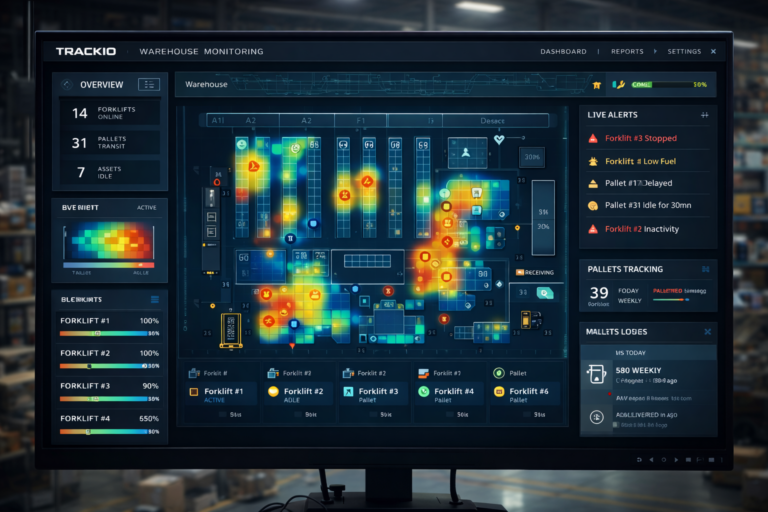
Instead of “this area feels busy,” you see dwell time heatmaps.
3. Routes Get Optimized
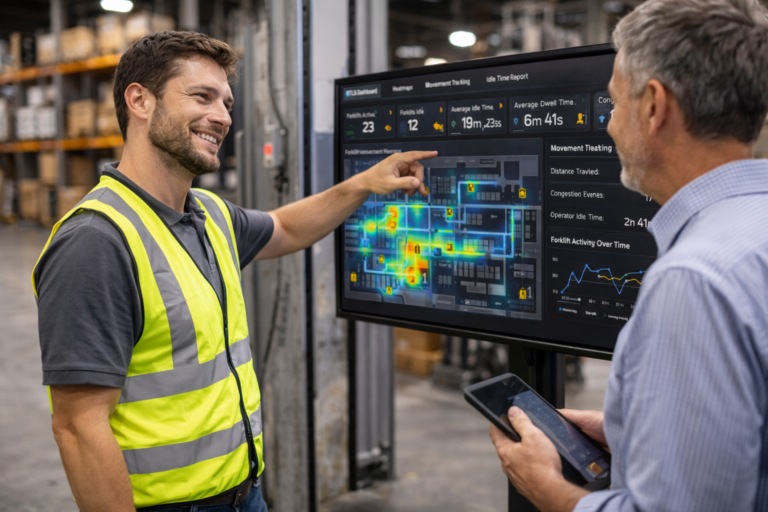
Repeated backtracking gets reduced with movement analysis.
4. Fair Performance Measurement
Data reflects environmental constraints, not just operator output.
5. Burnout Prevention Through Balance
Workload distribution becomes visible and adjustable.
When you reduce friction, you reduce fatigue. And when operators feel supported instead of monitored, trust increases.
The Productivity Ripple Effect
Addressing forklift operator burnout isn’t just about wellness. It’s about operational resilience.
Here’s what improves when visibility increases:
Fewer near-miss incidents
Reduced overtime due to workflow delays
Lower employee turnover
Higher morale in shift teams
Measurable zone optimization
If you’ve already explored zone-based alerts, you may want to review our internal resource: Warehouse Safety Insights
Tracking transforms guessing into measurable optimization. And optimization reduces burnout.
A Better Way to Measure Without Pressure
The fear around tracking is understandable. No one wants a “Big Brother” warehouse.
But modern RTLS systems, especially UWB-based tracking like TrackioGuru, focus on:
Zone-level performance
Workflow patterns
Asset movement
Heatmap analytics
Not personal micromanagement.
When operators see:
Less congestion
Fewer chaotic last-minute tasks
More predictable flow
They feel the difference.
And when supervisors see:
Data-backed process improvements
Objective workflow diagnostics
Reduced forklift operator burnout
They make better decisions.
The Human Side of Warehouse Efficiency
Forklifts don’t quit. Operators do.
If workflow friction continues unchecked, turnover becomes expensive.
But when you improve visibility:
You reduce stress.
You balance workload.
You prevent burnout.
You strengthen culture.
Forklift operator burnout is not a people problem. It’s a visibility problem. And visibility is fixable.
If this sounds familiar, let’s talk.
A short demo often makes the gap obvious.