
In warehouse operations, we talk about big investments — new forklifts, automation upgrades, staffing levels. But warehouse efficiency ROI often hides in something much smaller:
15 minutes.
Not a major breakdown. Not a safety shutdown. Just 15 minutes of delay per shift.
When multiplied across shifts, people, and days, that small gap quietly becomes a six-figure problem.
Today, let’s break down the math — no hard selling. Just perspective.
The Simple Math Behind Warehouse Efficiency ROI
Let’s assume a mid-sized warehouse:
3 shifts per day
12 forklift operators per shift
Average fully loaded labor cost: $30/hour
260 working days per year
Now imagine each operator loses 15 minutes per shift due to:
Waiting for instructions
Searching for pallets
Congested zones
Unclear staging areas
Misplaced assets
The Daily Cost
15 minutes = 0.25 hours
12 operators × 0.25 hours = 3 labor hours lost per shift
3 shifts × 3 hours = 9 hours lost per day
9 hours × $30/hour = $270 per day
The Annual Cost
$270 × 260 days = $70,200 per year
And that’s just labor.
Now factor in:
Delayed outbound shipments
Increased overtime
Equipment idle time
Missed SLAs
Safety risks from rushed recovery
Multiply this across larger facilities or multiple sites — and your warehouse efficiency ROI gap quickly approaches $200,000+ annually.
And we’re still talking about only 15 minutes.
Why Small Delays Compound Across Shifts
Operational inefficiencies don’t reset at the end of a shift.
They stack.
Congested aisles create slower routing
Unclear zones create hesitation
Asset misplacement creates search time
Search time creates frustration
Frustration creates errors
Over time, this affects:
Throughput consistency
Labor morale
Safety metrics
Compliance exposure
This is where measuring warehouse efficiency ROI becomes more than cost control — it becomes risk prevention.
According to OSHA warehouse safety guidelines: Warehouse Safety
Congestion and workflow breakdowns increase accident probability — especially involving forklifts and pedestrians.
Small time losses often signal larger structural gaps.
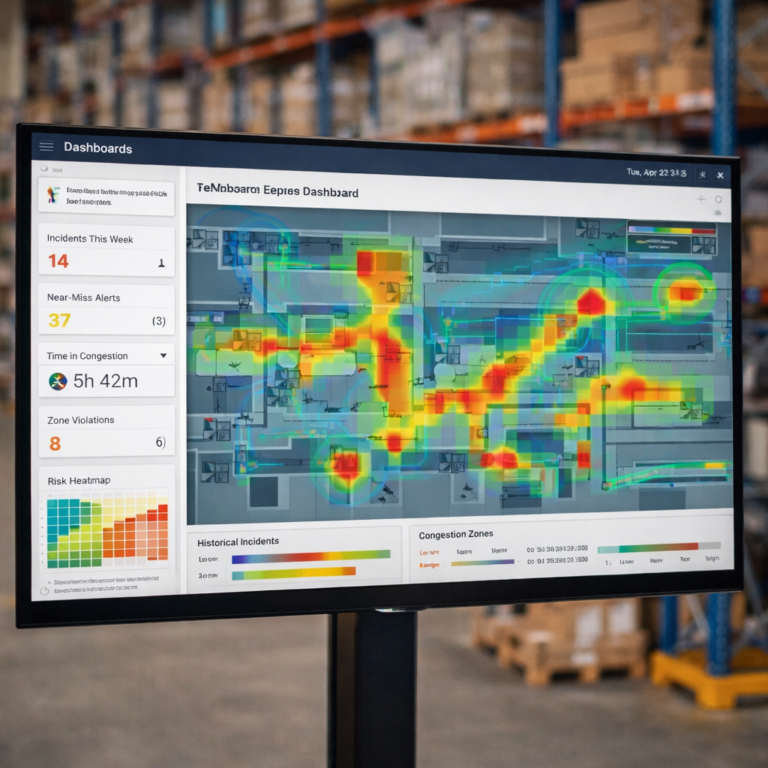
A Practical Way to Estimate Your Own 15 Minutes
Try this simple internal exercise:
Pick one shift.
Observe 5 operators.
Track:
Waiting time
Searching time
Congestion pauses
Equipment idle time
Multiply that across:
All operators
All shifts
All working days
The math often surprises leadership teams.
And when the data becomes visible, improvement becomes measurable.
That’s when warehouse efficiency ROI shifts from theory to operational advantage.

McKinsey reports that operational visibility improvements can increase productivity by 10–20% in logistics-heavy environments.
Even a 5% improvement in labor productivity in a $4M labor operation equals $200,000 annually.
Sometimes, the 15-minute delay isn’t small. It’s structural.
The question isn’t whether small delays exist. They do.
The real question is: Are they visible?
Because what gets measured gets optimized. And what gets optimized compounds.
Curious what your 15 minutes are worth?
Happy to show how teams measure this in real time.
If this sounds familiar, let’s talk. A short demo often makes the gap obvious.