
Introduction
Every day, warehouses and healthcare facilities face asset movement inefficiencies that remain invisible until they show up in profit margins. Forklifts idling longer than necessary, workers taking unauthorized routes, or layouts that force detours — all of these silently drain resources.
The challenge is simple: you can’t fix what you can’t see. That’s where real-time location systems (RTLS), zone monitoring, and spaghetti charts help you uncover and solve inefficiencies that spreadsheets and manual oversight often miss.
Section 1 – The Silent Profit Killers
When operations managers review costs, they typically focus on labor, equipment, and inventory. But hidden inefficiencies lurk in daily movements:
Idle Time: A forklift waiting just five minutes per trip adds up to hours of wasted productivity each week.
Unauthorized Routes: Staff sometimes take “shortcuts” that increase risk of accidents or bypass safety protocols.
Inefficient Layouts: Poorly placed storage zones or congested pathways lead to bottlenecks and fatigue.
Each of these small leaks may seem minor, but over time they add up to thousands of dollars lost annually.
Section 2 – Turning Invisible Costs into Actionable Insights
Traditional monitoring relies on supervisors walking the floor, but human observation can’t capture every movement. TrackioGuru’s UWB RTLS platform changes that.
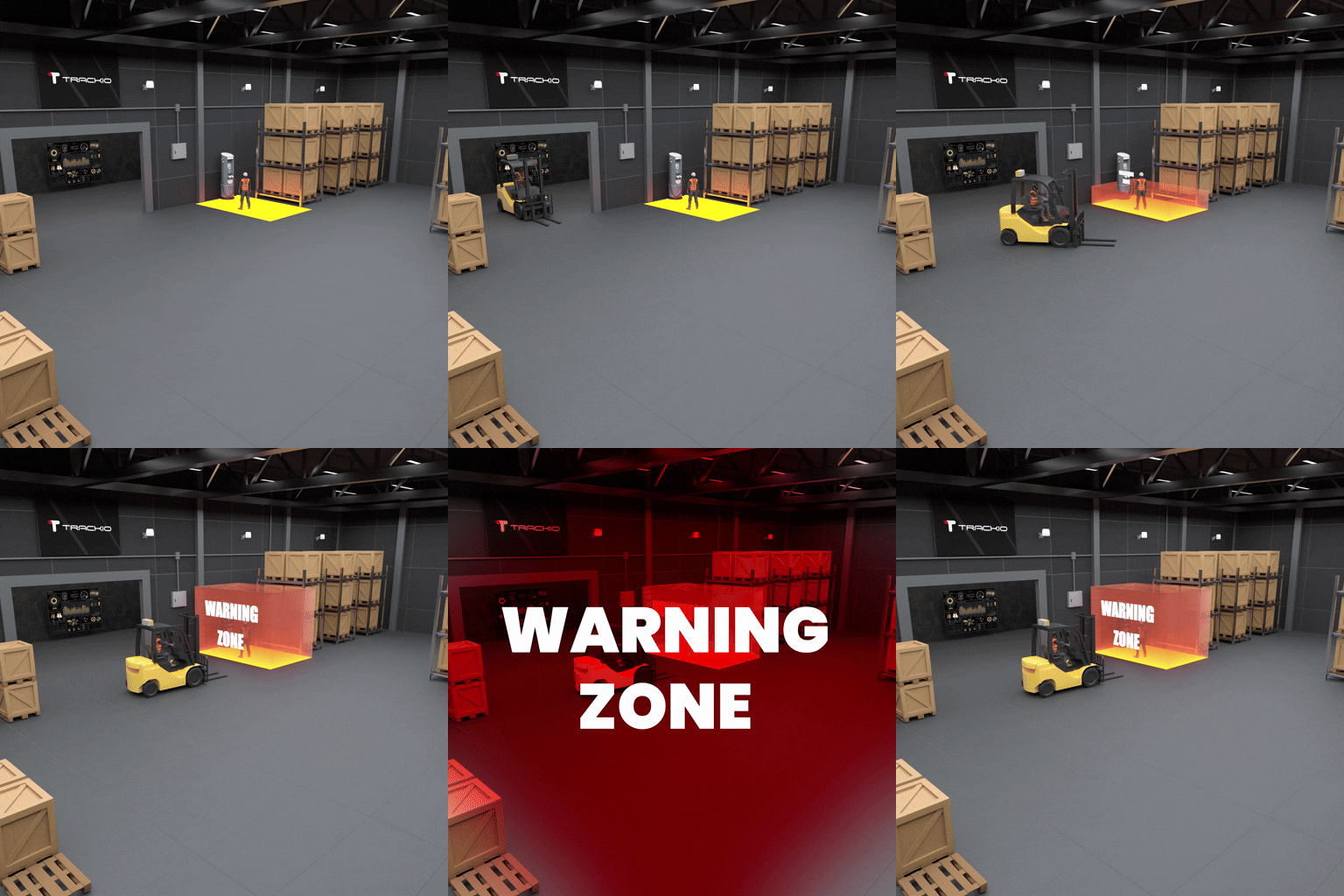
Zone Monitoring – Define zones for high-traffic areas, restricted spaces, or staging points. Receive alerts when assets or workers deviate from approved paths.
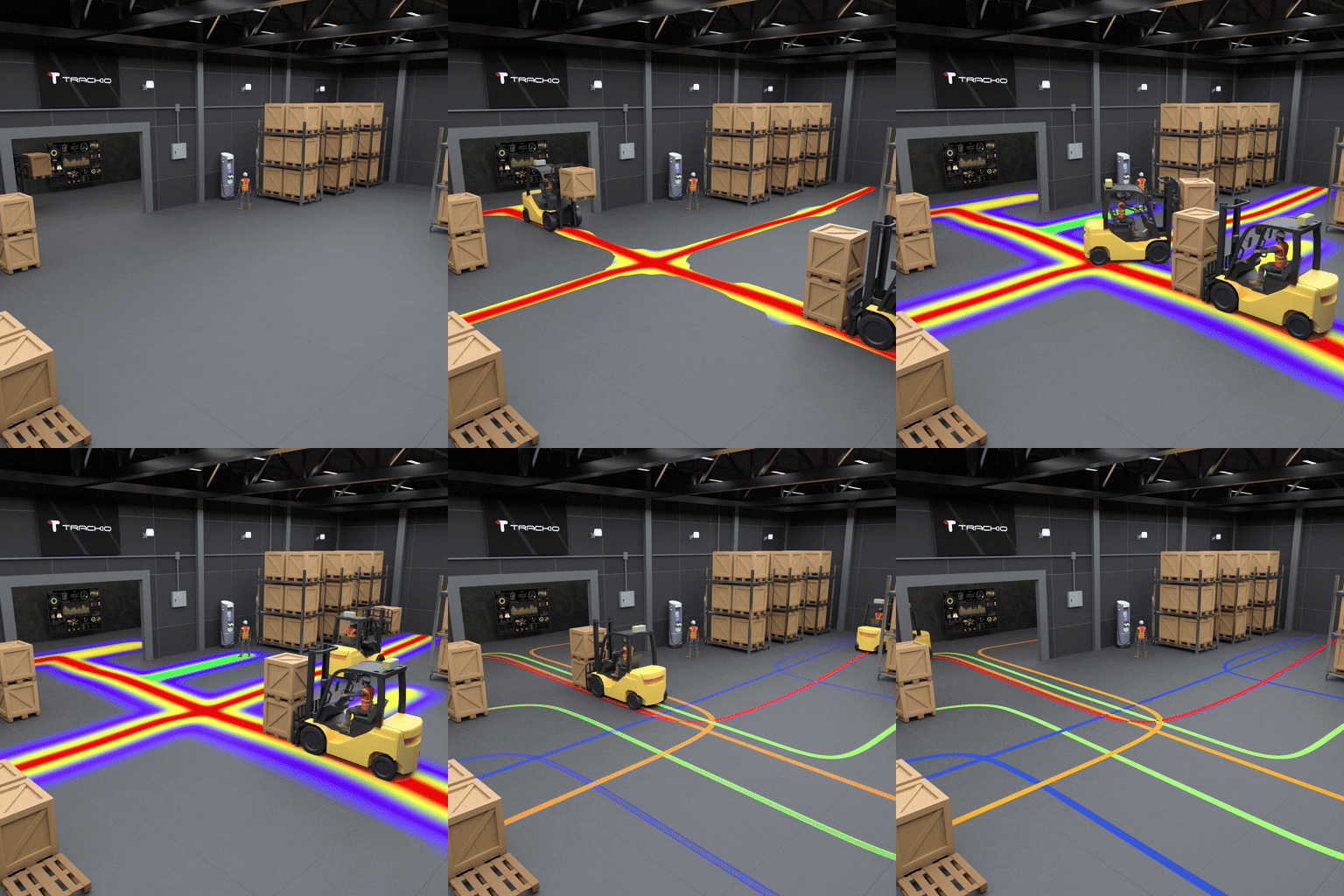
Spaghetti Charts – Visualize actual movement patterns over time. Instead of guessing why delays happen, you can see them clearly in a heatmap of inefficient routes.
Layout Optimization – Data-driven insights help redesign warehouse layouts. A minor aisle adjustment can shorten walking paths by 10–15%.
By combining these tools, facilities gain a complete picture of movement patterns, allowing managers to act proactively.
👉 Related reading: Warehouse Safety & Worker Protection
Section 3 – The ROI of Movement Tracking
Investing in RTLS for asset movement inefficiencies isn’t just about technology — it’s about measurable returns:
20% increase in throughput from reduced congestion and idle time
15% drop in overtime costs as workers complete tasks faster
Improved safety compliance with documented movement logs
Better asset utilization — fewer forklifts can handle the same workload efficiently
According to OSHA forklift safety guidelines, inefficient routes not only cost money but also increase accident risk. When you reduce unnecessary movement, you improve both safety and profits.
Section 4 – A Real-World Example
One mid-sized warehouse implemented spaghetti charts for forklift movement. Within two weeks, managers discovered drivers were circling long routes to avoid a congested aisle. By adjusting the layout and introducing restricted zones, they cut average trip time by 18%.
The result? Savings of over $40,000 annually in reduced fuel, labor, and equipment wear.
Ready to uncover hidden inefficiencies in your facility?
👉 Get a Free Movement Audit Consultation