
At Trackio, we’re redefining how businesses track and manage assets in real time. When developing our Real-Time Location System (RTLS), we evaluated several technologies, and one question kept coming up:
Should we go with UWB or RFID?
Both technologies offer unique advantages, but for real-time precision tracking in complex environments like warehouses and healthcare facilities, UWB (Ultra-Wideband) emerged as the clear winner.
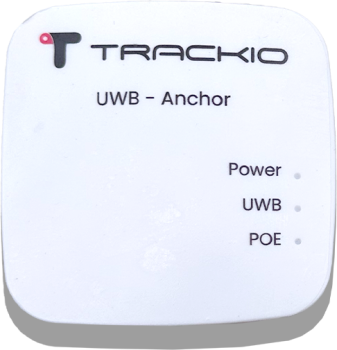
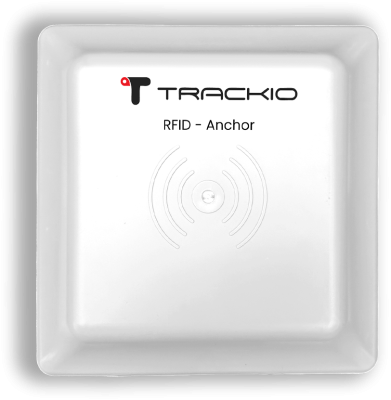
UWB vs RFID: A Side-by-Side Comparison
| Feature | RFID | UWB |
|---|---|---|
| Accuracy | 1–5 meters (Active RFID) | 10–30 cm |
| Latency | Variable | Sub-second real-time |
| Environmental Interference | High | Low (pulse-based, robust) |
| Infrastructure Cost | Medium | Moderate, with fewer readers |
| Use Case Fit | Inventory checks, Access control | Safety alerts, Forklift tracking, Zone monitoring |
While RFID is sufficient for tracking items on a shelf, UWB excels when you need to know exactly where something or someone is—and to act on it instantly.
Why We Chose UWB for Trackio’s RTLS
1. Ultra-High Accuracy
RFID can locate an item within a few meters. UWB, on the other hand, can track movements with centimeter-level precision.
This level of accuracy enables Trackio features such as:
- Forklift collision and tilt detection
- Real-time zone entry/exit monitoring
- Worker location heatmaps for efficiency analysis
2. Real-Time Updates Without Delay
RFID readers can lag, especially in busy environments. UWB emits short pulses over a wide frequency, allowing sub-second location updates. That means:
- Instant alerts for safety violations
- Faster, more reliable decision-making
- Continuous asset movement visualization
3. Performance in Harsh Environments
Warehouses have metal racks, machinery, and concrete—all of which degrade RFID signals. UWB’s time-of-flight based technology is less prone to signal loss and performs consistently in such conditions.
4. Cost-Effective in the Long Run
Though UWB tags are more expensive than passive RFID tags, the total cost of ownership is lower:
- Fewer anchors needed for coverage
- Longer tag battery life
- Easier deployment and maintenance
Trackio’s system is optimized for medium-sized warehouses and medical facilities, offering high performance without overwhelming complexity or cost.
The Future is UWB—And It’s Already Here
Global tech leaders like Apple and Amazon are integrating UWB into their ecosystems. At TrackioGuru, we’re proud to bring this enterprise-grade technology to businesses of all sizes.
With our UWB-based RTLS, you gain:
- Safer workspaces
- Smarter asset management
- Real-time operational intelligence